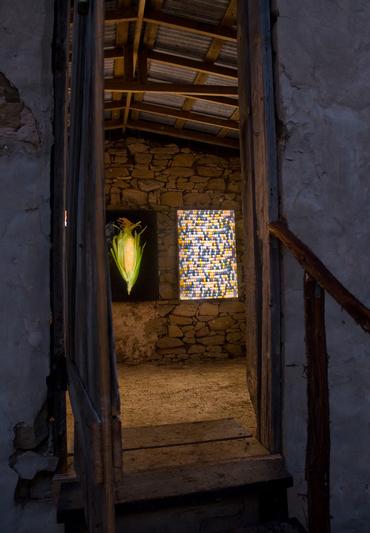
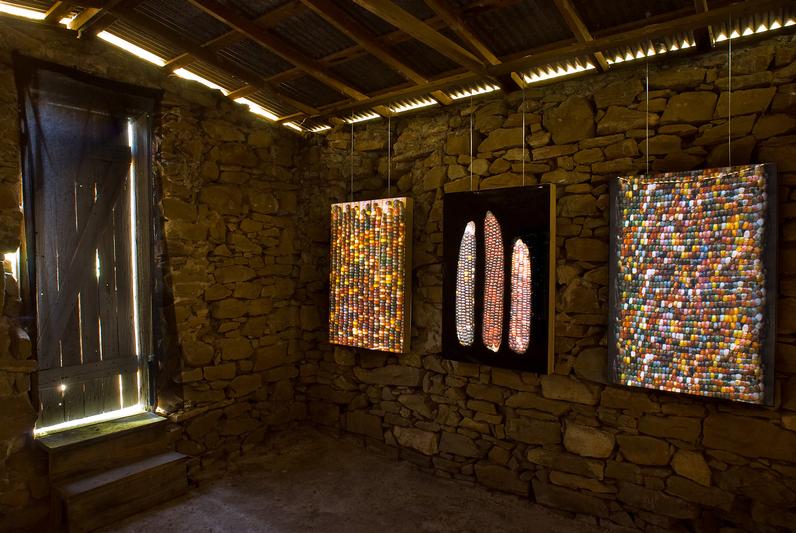
 These transparencies are lit using only solar power.
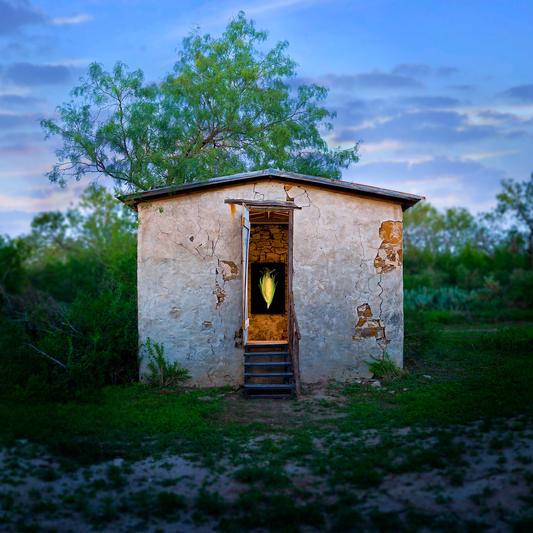
 Exterior of the installation
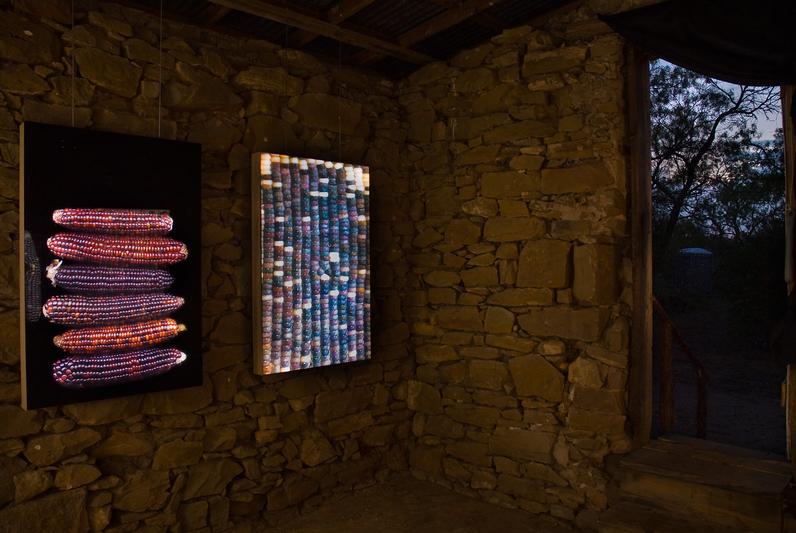 Night view
 A video describing the motivation and production of an adaptive re-use cultural project.
The Land Heritage Institute sits on 1,200 acres along the historic Medina River — once the official boundary between Texas and Mexico — where evidence of human habitation stretches back ten thousand years. When commissioned to create a permanent installation here, I chose the Corn Crib, a 19th-century storage building that had long since fallen out of use.
Corn struck me as the ideal subject: one of humanity’s oldest and most consequential genetic projects, a crop shared across every culture that has ever worked this land. Using a slit-scan camera of my own design, I photographed heirloom varieties in the round, the sensor capturing hundreds of cross-sections per second and unrolling each ear into a continuous surface that reveals the natural geometry of the kernels.
Those images now illuminate the Corn Crib’s interior as LED-lit transparencies — the sole source of light in the building, powered entirely by solar panels. The installation symbolically refills the structure with what it once held, and in doing so, restores a kind of purpose to it: the building shelters the art, and the art justifies the building.